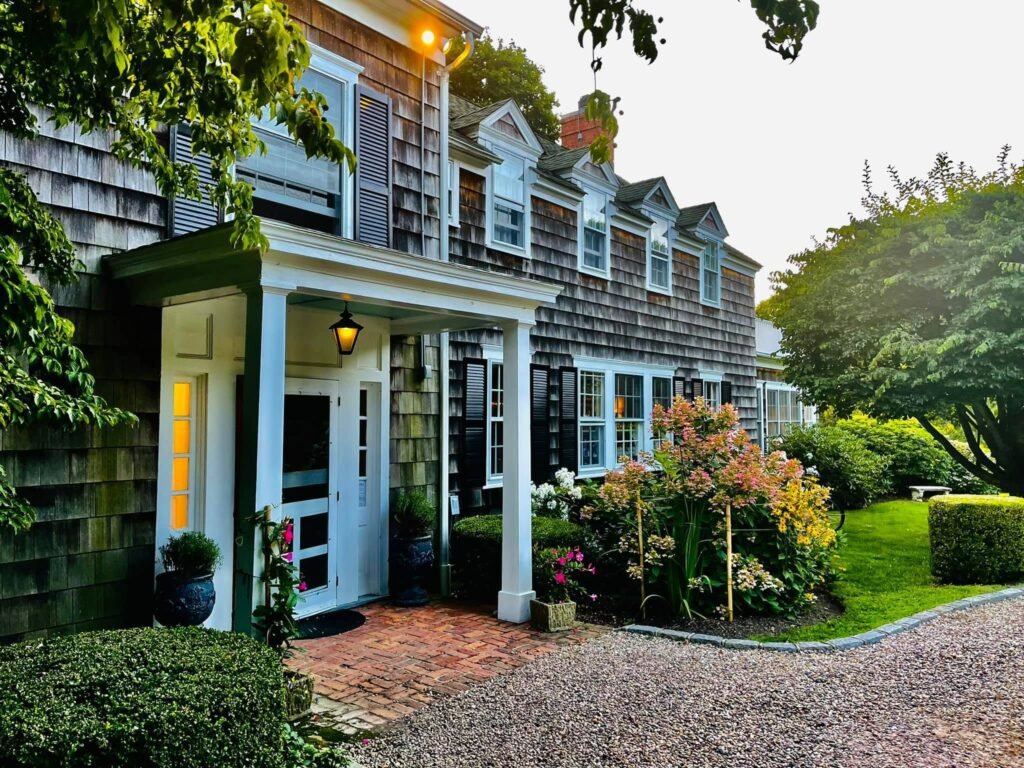
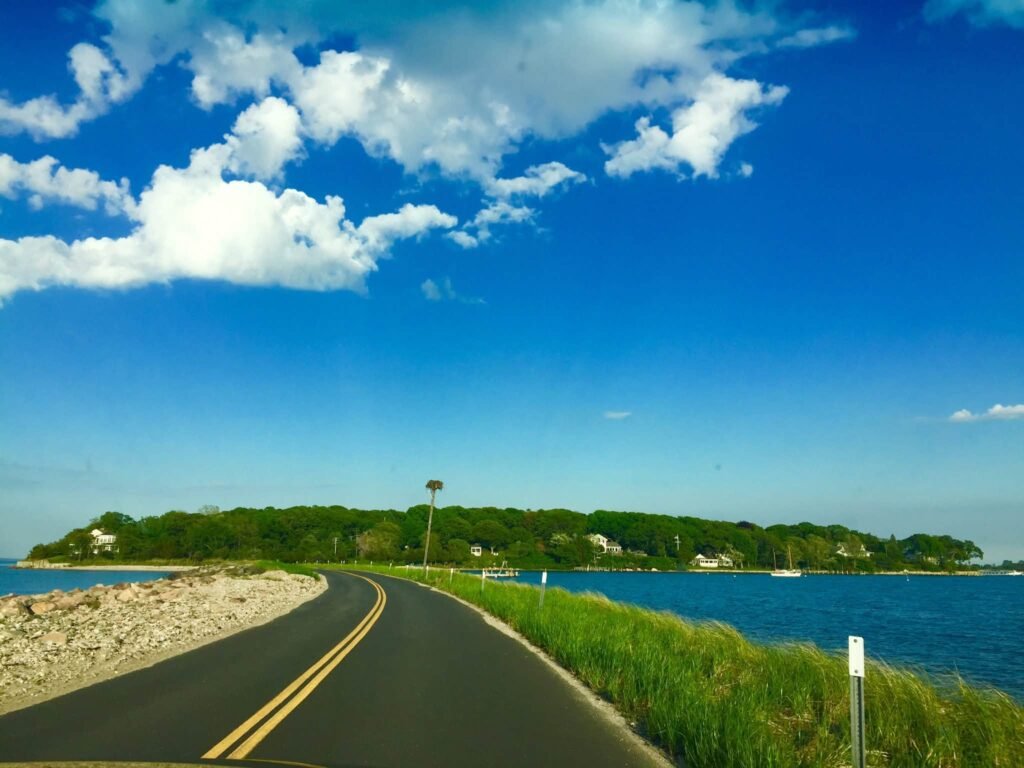
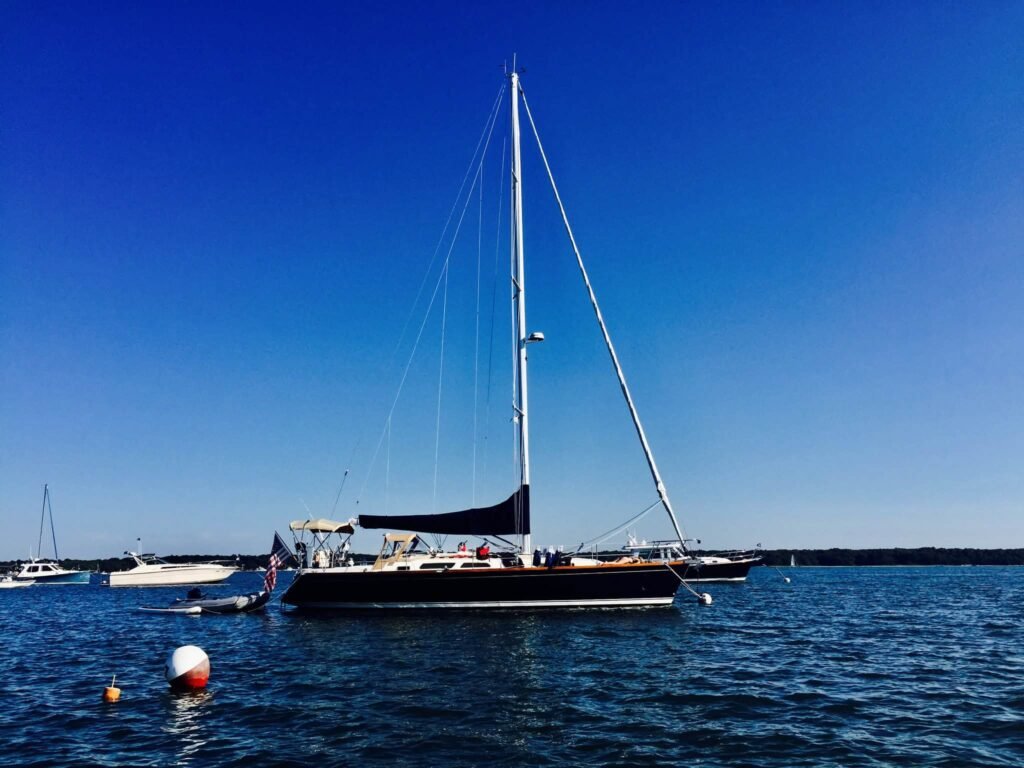
Early on, Joan Covey had a vision. Like Mont St. Michel in France and St. Michael’s Mount in southern England, Big Ram Island was a tidal island; then a dirt road was built on the low-lying strip of land on Shelter Island, New York. Today, you can take the North or South Ferry to Shelter Island, which lies between the North Fork and South Fork of Long Island. There you will find a beautiful strip of land which connects the mainland to Little Ram Island. To the right you will find a single short column with a little ram’s head on a plaque, designating that you are in a very special place. Next, another long-lost tidal corridor to Big Ram Island, where the Ram’s Head Inn beckons from the top of the hill overlooking a very serene Coecles Harbor.
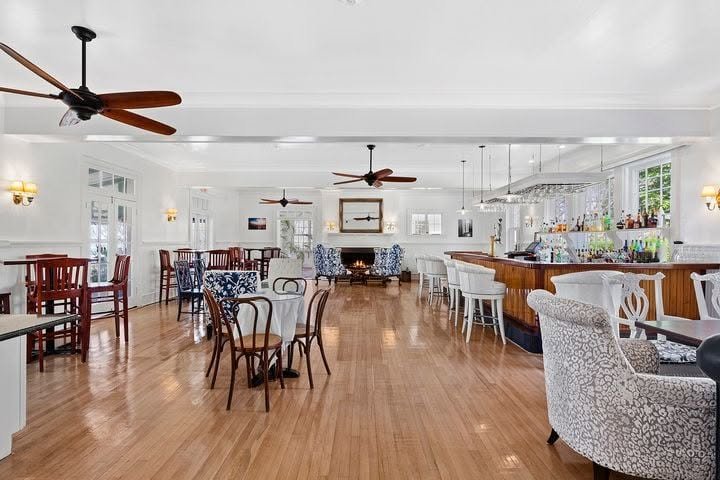
The Ram’s Head Inn is far more than a historic inn. Over the past century, it has welcomed vacationers, artists, scientists, political leaders, and visionaries, earning a reputation as one of the East Coast’s most remarkable gathering places. From its pioneering female founder to its role in one of the most important scientific conferences of the twentieth century, the Inn occupies a unique place in American history.
Construction began in 1919, when there were very few women developers and the inn seemed like a gamble, as it was in an obscure and secluded location. However, it wasn’t a gamble, as the Ram’s Head was created on a secluded waterfront by design. The elegant accommodations focused on the natural scenery and created a safe space for prestigious guests.
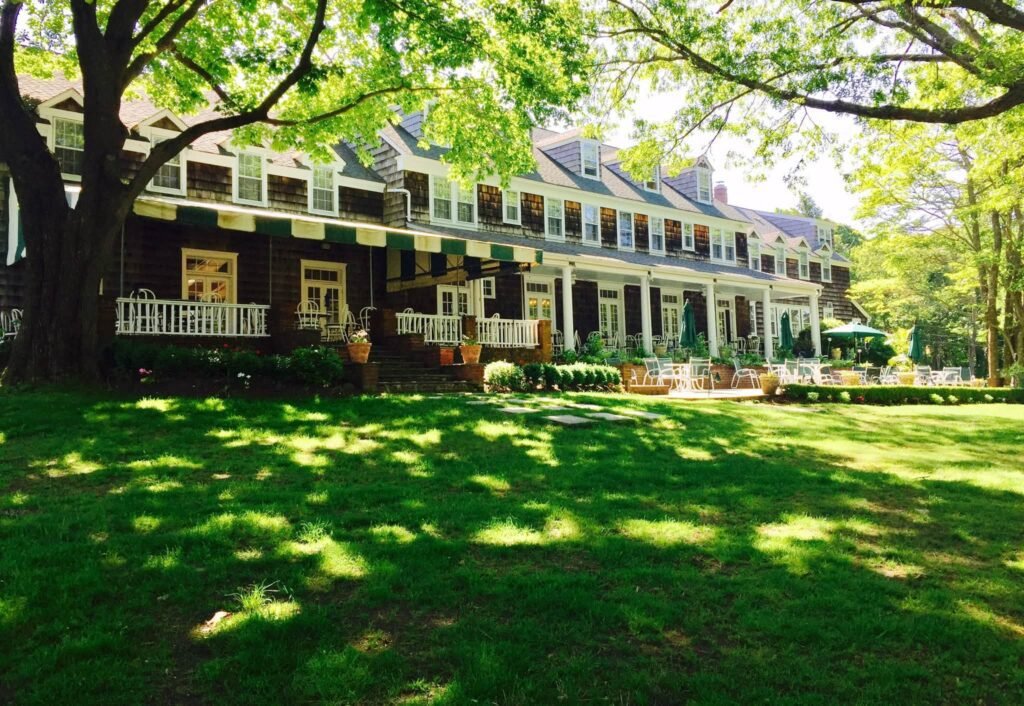
Under James and Linda Eklund, the Inn became one of Shelter Island’s most beloved gathering places. For forty-one years, it hosted weddings, charitable events, school celebrations, business retreats, and family vacations while carefully preserving its historic character.
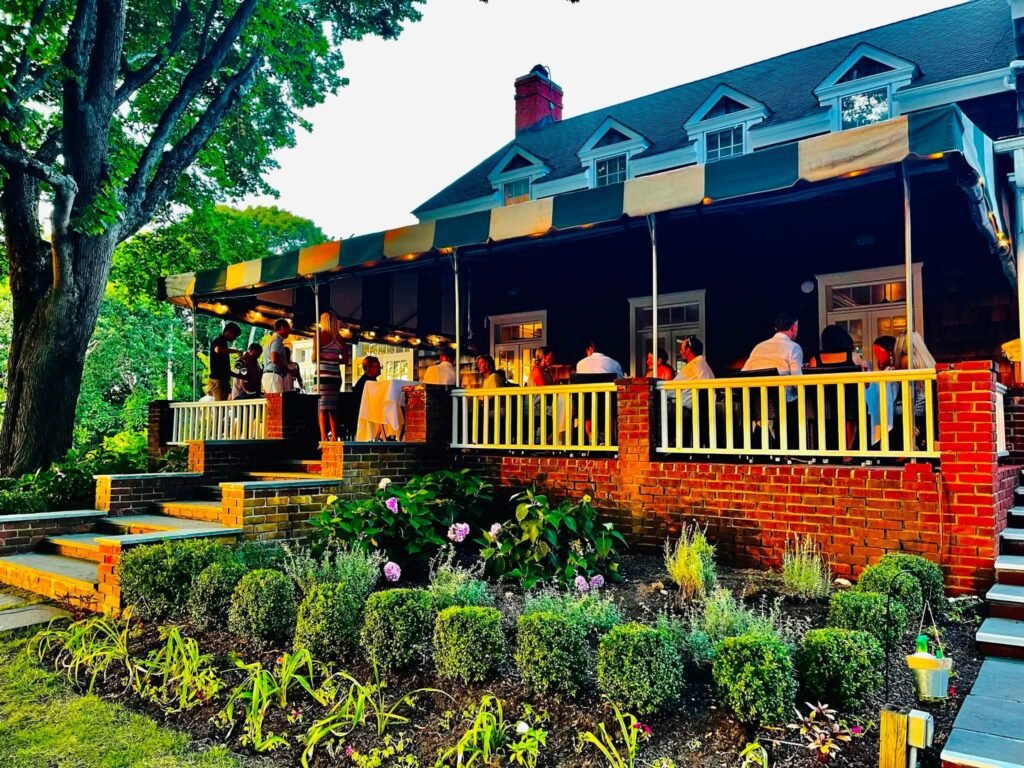
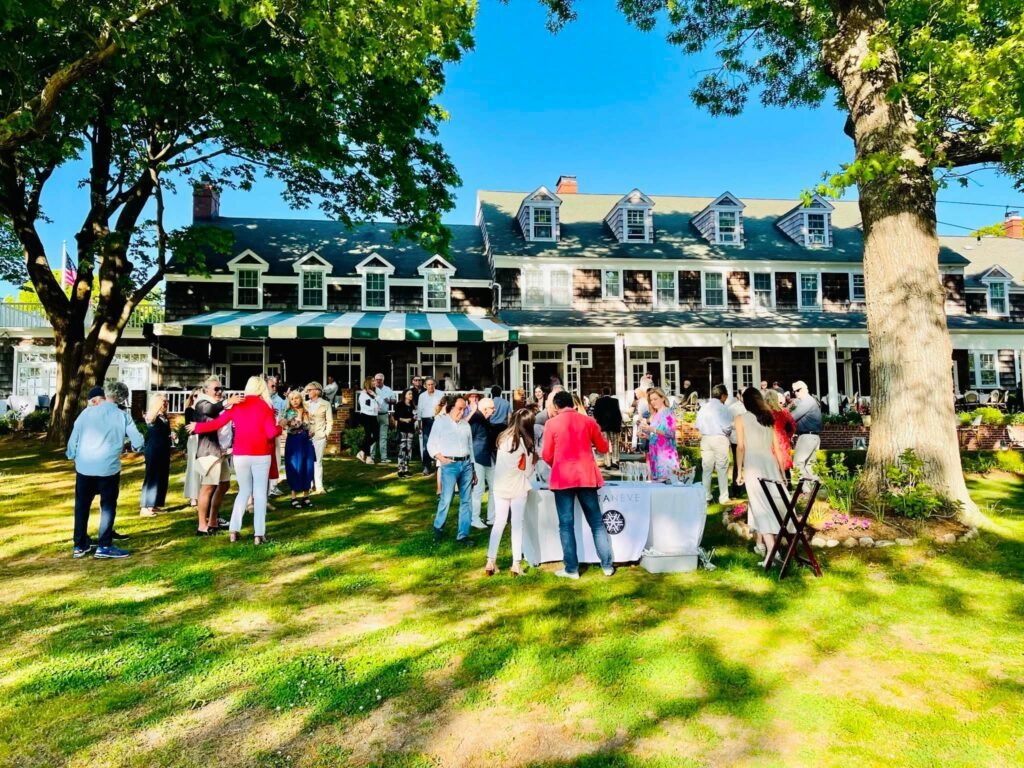
Since 2021, owner Aandrea Carter has continued restoration efforts while positioning the Inn as a destination for wellness retreats, arts programming, literary events, private gatherings and quiet conferences. The Ram’s Head Inn exudes quiet money, intellectualism and legacy.
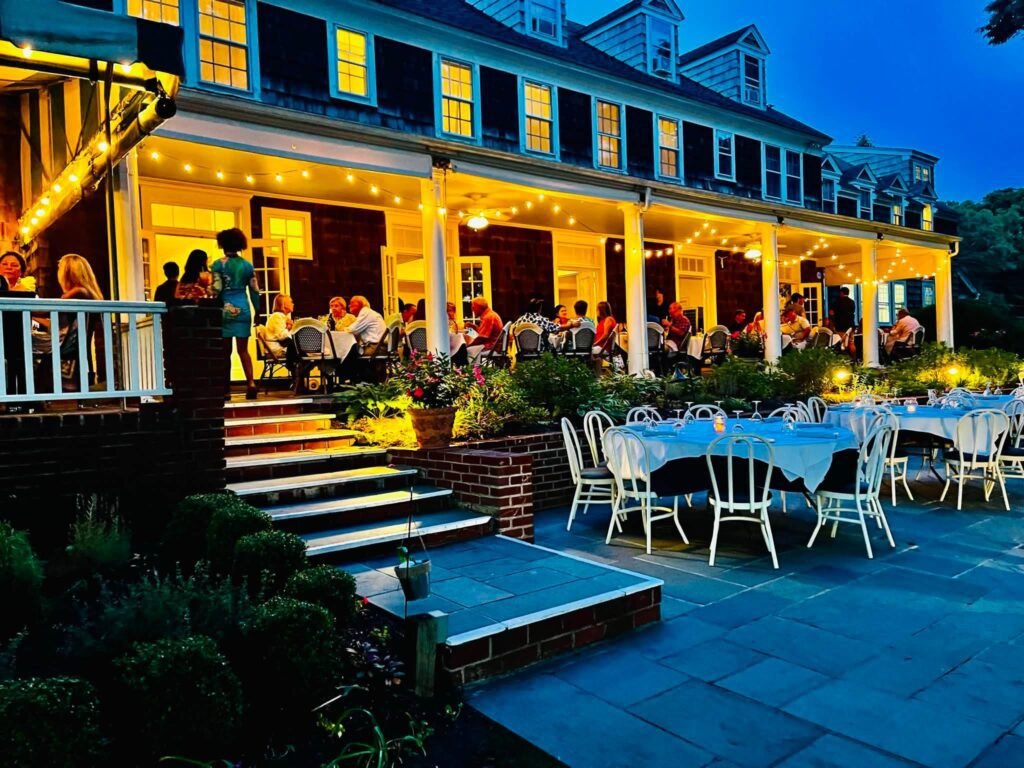
The Shelter Island Conference of 1947
The Ram’s Head Inn achieved worldwide recognition when it hosted the Shelter Island Conference on the Foundations of Quantum Mechanics from June 2–4, 1947. The meeting came just two years after World War II ended and represented the first opportunity for many of the world’s leading physicists to meet freely after years of wartime secrecy surrounding the Manhattan Project. The 1947 Shelter Island Conference brought many of the architects of modern physics at a pivotal moment, setting the stage for decades of scientific breakthroughs. Historians now regard the conference as one of the most influential scientific meetings ever held.
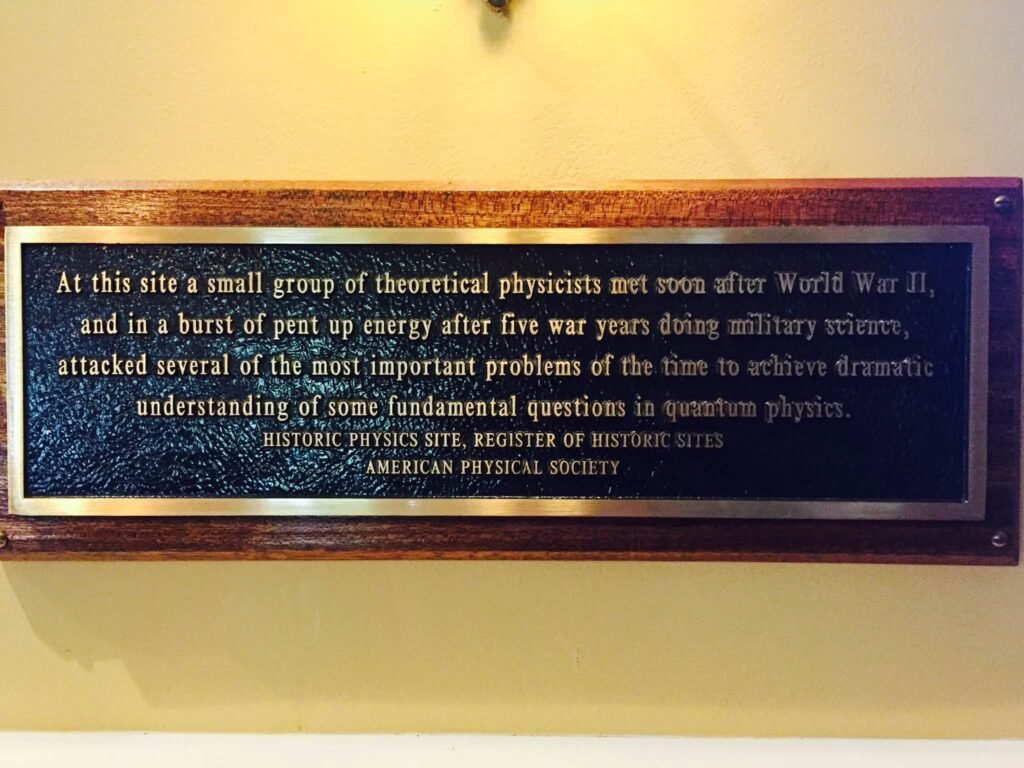
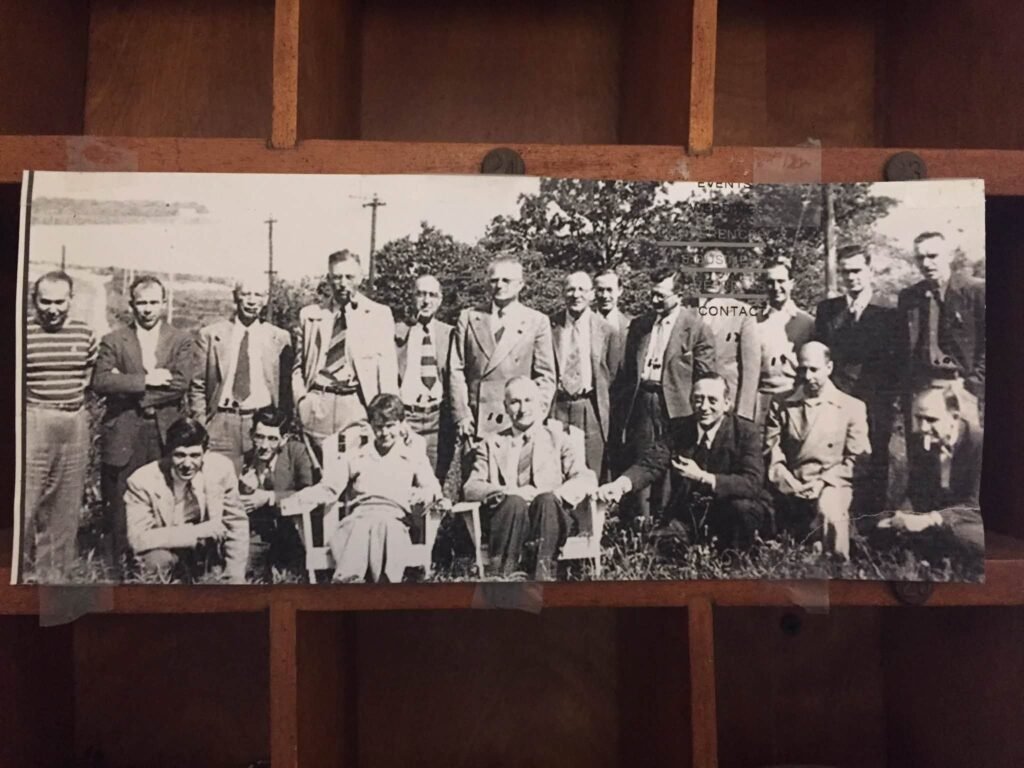
Topics included: Quantum electrodynamics, nuclear physics, cosmic rays, Meson theory, and the future of atomic science. J. Robert Oppenheimer later described it as one of the finest scientific meetings he ever attended, while Richard Feynman recalled it as his introduction to the world’s leading physicists. The conference was organized under the leadership of Duncan A. MacInnes, with assistance from the National Academy of Sciences and J. Robert Oppenheimer. The conference was intentionally limited to approximately two dozen participants.
The attendees included many of the most influential physicists of the era: Hans A. Bethe, Gregory Breit, John H. Van Vleck, Isidor I. Rabi, J. Robert Oppenheimer, Richard P. Feynman, Julian Schwinger, Edward Teller, John Archibald Wheeler, John von Neumann, David Bohm, Victor Weisskopf, Robert Serber, George Gamow, Philip Morrison, Robert Marshak, Willis Lamb, Abraham Pais, Linus Pauling, Eugene Wigner, Samuel Goudsmit, David M. Dennison, George E. Uhlenbeck and Jerrold Zacharias.
Taken together, these scientists accumulated more than a dozen Nobel Prizes and fundamentally shaped twentieth-century science. Their work underpins technologies and fields we rely on today, including: Nuclear energy and nuclear medicine, magnetic resonance imaging (MRI), atomic clocks and GPS, modern computers and computer architecture, particle accelerators, lasers and semiconductors, quantum electrodynamics, big bang cosmology, molecular chemistry and structural biology, and modern materials science
The Ram’s Head Inn is the birthplace of modern physics.
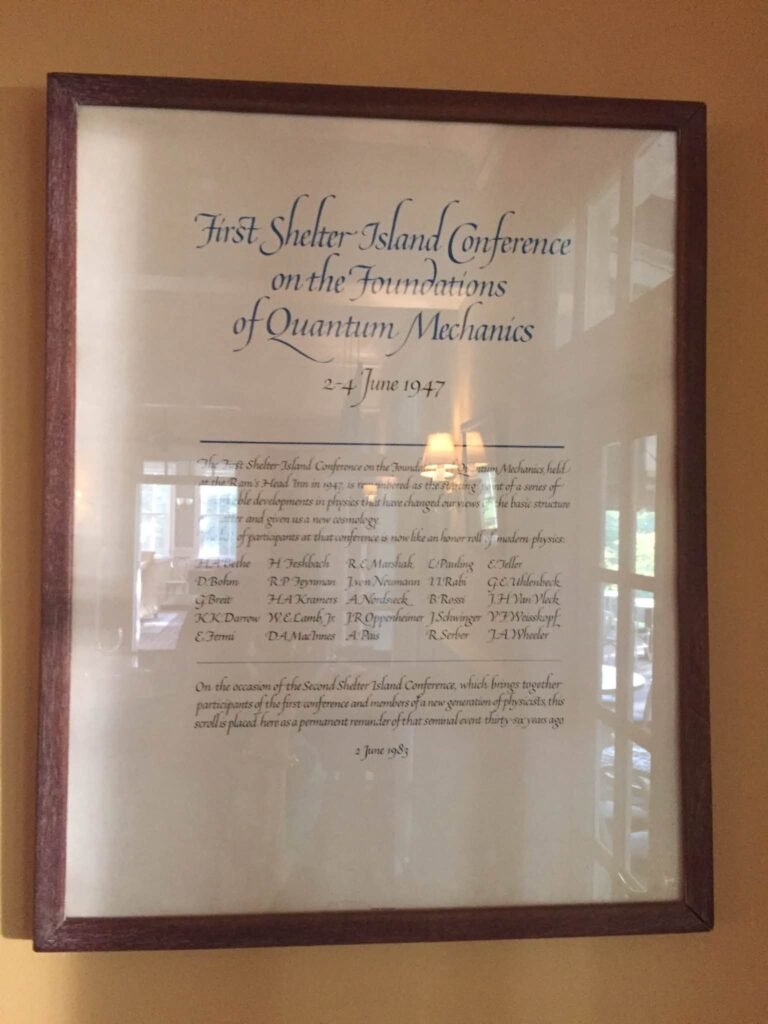
The importance of the Shelter Island Conference cannot be overstated. Many ideas discussed during those three days became foundational to modern quantum electrodynamics and helped launch a new era in theoretical physics. The meeting directly influenced subsequent conferences at Pocono (1948) and Oldstone (1949), which further advanced the field.
Exactly 36 years after the landmark 1947 meeting, on June 2–4, 1983, the Ram’s Head Inn again hosted a distinguished gathering of physicists, with several original attendees returning alongside a new generation of scientists, including Stephen Hawking; it was called Shelter Island II. Sponsored by Rockefeller University, it put together surviving participants from the original conference alongside a new generation of theoretical physicists. These scientists represented many of the architects of modern high-energy physics and cosmology; a bridge between two eras of physics.
Unlike the 1947 conference, which focused on the foundations of quantum electrodynamics, Shelter Island II addressed emerging ideas such as supersymmetry, grand unification, inflationary cosmology, Kaluza–Klein theory, and quantum gravity. Their work included the Standard Model of particle physics, the inflationary universe, supersymmetry, string theory, quantum gravity, and unified field theories. Many of the lectures were later published in the volume Shelter Island II: Proceedings of the 1983 Shelter Island Conference on Quantum Field Theory and the Fundamental Problems of Physics.
The following physicists had attended the original Shelter Island Conference. They returned for the 1983 reunion session: Hans Albrecht Bethe, David Bohm, Richard Phillips Feynman, Willis Eugene Lamb, Robert Eugene Marshak, Abraham Pais, Linus Carl Pauling, Isidor Isaac Rabi, Julian Seymour Schwinger, Victor Frederick Weisskopf and John Archibald Wheeler. These were the living participants from the original conference who were invited to reflect on the historic 1947 meeting.
In addition to the original attendees, the conference welcomed many of the world’s leading theoretical physicists of the era, including: Stephen Hawking, Edward Witten, Steven Weinberg, Murray Gell-Mann, Alan Guth, Roman Jackiw, Toichiro Kinoshita, Tsung-Dao Lee, Andrei Linde, Yoichiro Nambu, John Henry Schwarz, Bruno Zumino, and Paul West
The pioneers who had rebuilt quantum electrodynamics after World War II met with the scientists who were then defining the next frontier of theoretical physics. One of the conference’s most notable presentations was Stephen Hawking’s lecture, “The Cosmological Constant Is Probably Zero,” while Edward Witten contributed a substantial paper on Kaluza–Klein theories, which became part of the published proceedings.
The conference reinforced the Ram’s Head Inn’s unique place in scientific history. Few hotels in the world can claim to have hosted two generations of the greatest physicists of the twentieth century, from Oppenheimer, Feynman, and Bethe in 1947 to Hawking, Witten, Weinberg, and Gell-Mann in 1983.